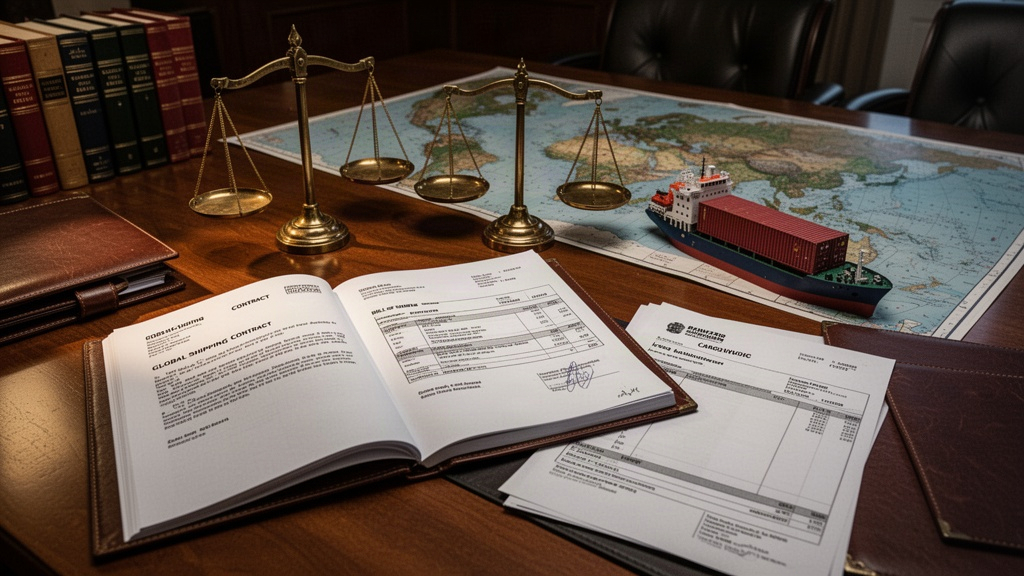
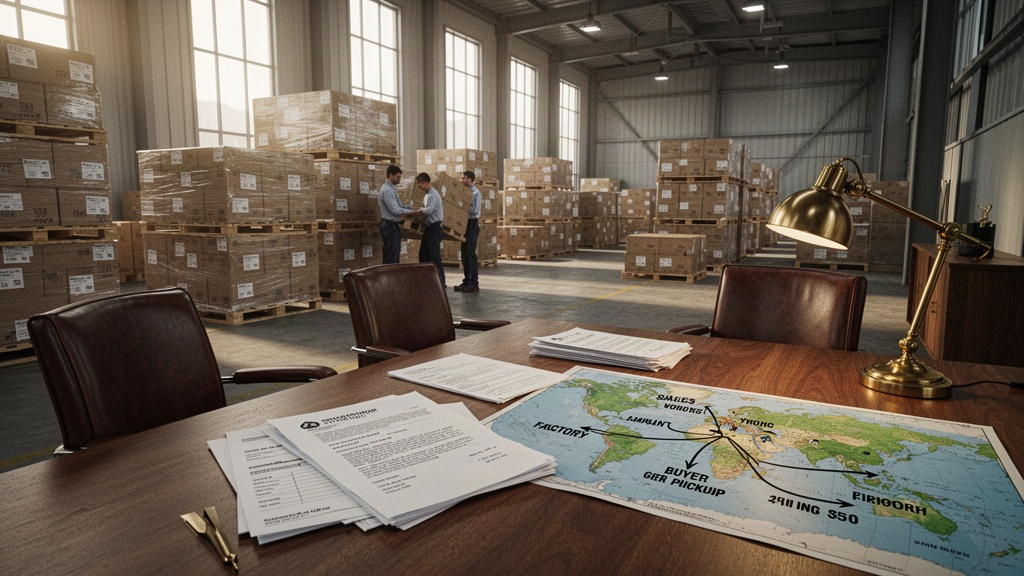
Deciding how to structure your international trade terms is one of the most consequential choices a business makes when shipping goods across borders. EXW Incoterms — short for Ex Works — sit at one extreme of the Incoterms spectrum published by the International Chamber of Commerce, placing virtually every responsibility on the buyer from the moment goods are ready at the seller's premises. For exporters, that sounds attractive. For buyers, it can be a logistical and legal minefield. Whether you are a manufacturer in the Midwest shipping to a European distributor, or a UK importer sourcing from Southeast Asia, understanding exactly what EXW commits you to — and what it does not — shapes your cost exposure, your customs liability, and ultimately your commercial relationships.
What EXW Incoterms Actually Mean in Practice
The Incoterms 2020 rules, the current edition issued by the International Chamber of Commerce, define Ex Works as the delivery term under which the seller makes goods available at a named place — typically their factory, warehouse, or production facility. From that precise moment, the buyer bears all costs and risks associated with the journey: loading onto the collecting vehicle, inland transport to the export port, export clearance, ocean or air freight, import duties, and final delivery to destination. The seller's obligation is essentially to pack the goods and notify the buyer they are ready.
This is not a minor administrative detail. Under EXW, the buyer is responsible for export customs clearance in the country of origin. That creates a real legal complication. In the United States, for instance, export declarations filed with US Customs and Border Protection must generally be made by a US-resident entity. A foreign buyer operating under EXW may lack the legal standing to file those documents without appointing a licensed customs broker or freight forwarder as their agent. Overlooking this requirement can trigger delays, fines, or outright refusal of export.
The named place of delivery matters enormously. If the contract simply states "EXW, Chicago" without specifying a loading dock or warehouse address, disputes about where the seller's obligation ends and the buyer's begins become almost inevitable. Precise drafting is not optional — it is the difference between a clean transaction and a costly arbitration. Legal practitioners advising on international trade contracts consistently flag vague EXW clauses as a primary source of commercial litigation.
One further nuance: EXW does not require the seller to load goods onto the buyer's vehicle. If the parties want the seller to take responsibility for loading, they must explicitly negotiate that obligation and record it in the contract. The Incoterms rules themselves will not imply it.
The Risk and Cost Allocation Every Shipper Should Map Out
Risk transfer under EXW happens earlier than under any other Incoterm. The moment goods are placed at the seller's disposal at the agreed location, risk passes to the buyer — even if the goods have not yet moved an inch. If a forklift accident damages the pallet while the buyer's carrier is loading it, the financial loss falls on the buyer. This front-loaded risk profile demands that buyers secure cargo insurance covering the full journey from the seller's premises, not just from the port of loading.
From a cost perspective, EXW gives the seller maximum simplicity. No freight booking, no export documentation, no port charges. That simplicity, though, carries a hidden cost for the overall transaction. Buyers unfamiliar with the origin country's logistics market often pay above-market rates for local transport and port handling, because they lack the relationships and volume that the seller's own freight forwarder would leverage. The total landed cost under EXW can therefore exceed what it would be under a term like FCA (Free Carrier), where the seller handles export clearance and places goods with the carrier at a named point.
For sellers, the appeal is clear: quote a lower ex-works price, let the buyer manage logistics complexity, and keep the accounts receivable clean. Yet this apparent simplicity creates its own commercial risk. If a buyer struggles with customs clearance, freight booking, or local regulations in the seller's country, shipments stall. The seller's production schedule, warehouse space, and customer relationships all suffer. A transaction that looks administratively clean on paper can become operationally disruptive in practice.
Tax authorities in several jurisdictions have also scrutinized EXW transactions closely. In the UK, for example, HMRC guidance on VAT zero-rating for exports requires the seller to hold evidence that goods have physically left the country. Under EXW, gathering that evidence — bills of lading, customs export declarations — depends entirely on the buyer's cooperation. Sellers who cannot produce it risk losing their zero-rating claim and facing an unexpected VAT liability.
When EXW Makes Commercial Sense — and When It Does Not
EXW works well in a narrow set of circumstances. The clearest case is a domestic sale where the parties use Incoterms loosely to allocate transport responsibility within a single country, with no cross-border complications. It also suits transactions where a sophisticated, experienced importer has its own logistics infrastructure in the seller's country — a multinational retailer with a regional distribution hub, for instance, or a trading company with established customs broker relationships at every major port.
For small and medium-sized businesses importing for the first time, EXW is rarely the right starting point. The administrative burden placed on the buyer — arranging local transport, filing export declarations, coordinating with port authorities in a foreign country — requires expertise that takes years to build. A single misstep in export documentation can result in goods being held at the border, generating demurrage charges that quickly erode any price advantage the EXW quote appeared to offer.
Sellers should think carefully before defaulting to EXW simply because it reduces their paperwork. Offering FCA terms instead, where the seller handles export clearance and delivers goods to the carrier at a named location, often makes the transaction smoother for both parties without materially increasing the seller's cost. Many experienced exporters have moved away from EXW precisely because the downstream complications created by inexperienced buyers damaged their operational efficiency and their reputation for reliable delivery.
The choice of Incoterm also affects trade finance arrangements. Letters of credit, which remain common in transactions between parties without an established relationship, require precise alignment between the Incoterm, the shipping documents specified, and the point at which the bank will release payment. EXW creates difficulties here because the documents evidencing shipment — the bill of lading, the export declaration — are in the buyer's hands, not the seller's. Structuring a letter of credit around EXW terms requires careful legal and banking advice to avoid a situation where the seller has released goods but cannot present the documents needed to trigger payment.
Choosing the Right Term for Your Shipping Strategy
The Incoterms framework offers eleven terms, each calibrated for different modes of transport, levels of seller involvement, and risk appetites. EXW Incoterms represent one end of the spectrum; DDP (Delivered Duty Paid) sits at the other, placing all obligations on the seller right through to the buyer's premises. Between those poles, terms like FCA, CPT, CIP, and DAP offer graduated allocations of responsibility that often suit cross-border trade better than either extreme.
Before selecting a term, both parties should map out four variables: who has existing relationships with carriers and freight forwarders in the country of origin, who is better placed to handle export and import customs clearance, who can most efficiently arrange cargo insurance, and what the implications are for VAT, sales tax, or other indirect taxes in the seller's jurisdiction. The answers to those questions, not habit or commercial pressure, should drive the Incoterm selection.
Legal advice from a qualified international trade lawyer or a licensed customs consultant is genuinely worth the investment before finalizing any significant cross-border supply agreement. The Incoterms rules do not address every issue — they say nothing about title transfer, payment terms, or what happens when goods are lost or damaged in transit and the parties dispute who bears the loss. Those gaps must be filled by the governing law clause in the contract and by carefully drafted supplementary provisions.
A business that treats Incoterm selection as a checkbox exercise rather than a strategic decision will eventually pay for it — through unexpected costs, customs delays, or disputes that a well-drafted contract would have prevented. EXW can be the right choice, but only when both parties fully understand what they are agreeing to and have the operational capacity to deliver on their respective obligations from the moment the goods are made available at the seller's door.